





Celebrate Black History Month in Central New York by learning about prominent abolitionists, the Underground Railroad and more at these museums and historical sites.
Please note: The information was up-to-date at the time of publication. Visit each website to confirm details.




Gerrit Smith Estate
A National Historic Landmark, this estate was the former home of abolitionist Gerrit Smith – He helped hundreds during his life, according to its website, working to free enslaved individuals, and providing land and other resources. Though the buildings are currently closed during the winter months, guests are encouraged to walk the estate’s three acres and view its outdoor signage.
Location: 5304 Oxbow Road, Peterboro, NY.
While you’re in Peterboro, you can also stop by the National Abolition Hall of Fame and Museum, housed in the same building as the inaugural meeting of the New York State Antislavery Society in 1835. It is also currently closed, but you can view the gardens and outdoor signage.
Location: 5255 Pleasant Valley Road, Peterboro, NY.
Oneida County Freedom Trail
The Oneida County Freedom Trail explores the history of the Underground Railroad in Oneida County. Stops on Utica’s walking tour include: Mechanics Hall, the site of the 1835 Utica Riot, and Devereux Street, where an abolitionist newspaper was published. You can also visit the Oneida County Freedom Trail’s website to learn more about the region’s prominent abolitionists (and towns).
Start at the Oneida County History Center with the “Central New York & The Birth of the Oneida County Freedom Trail” exhibit and then explore downtown Utica on a self-guided walking tour with this digital guide.
Location: 1608 Genesee St, Utica, NY.
Onondaga Historical Society
The Onondaga Historical Museum houses several permanent exhibits, including “Freedom Bound: Syracuse & The Underground Railroad,” which uses images, voices, music and more to explore topics such as slavery, abolitionism and tolerance. It also partnered with Syracuse University and the Black History Preservation Project to create “Our Stories: A Virtual Black History Museum,” featuring photos, audio interviews, and a documentary .
Location: 321 Montgomery St., Syracuse, NY.
Seward House Museum
The former residence of William Henry Seward, who served as Secretary of State for Presidents Abraham Lincoln and Andrew Johnson, was also a stop on the Underground Railroad. Visitors can view a variety of artifacts and learn about the relationship between Harriet Tubman and the Seward family – part of the “Forged in Freedom: The Bond of the Seward Tubman Families” exhibit. Several virtual tours are also available on the Seward House Museum’s website.
Location: 33 South St., Auburn, NY.
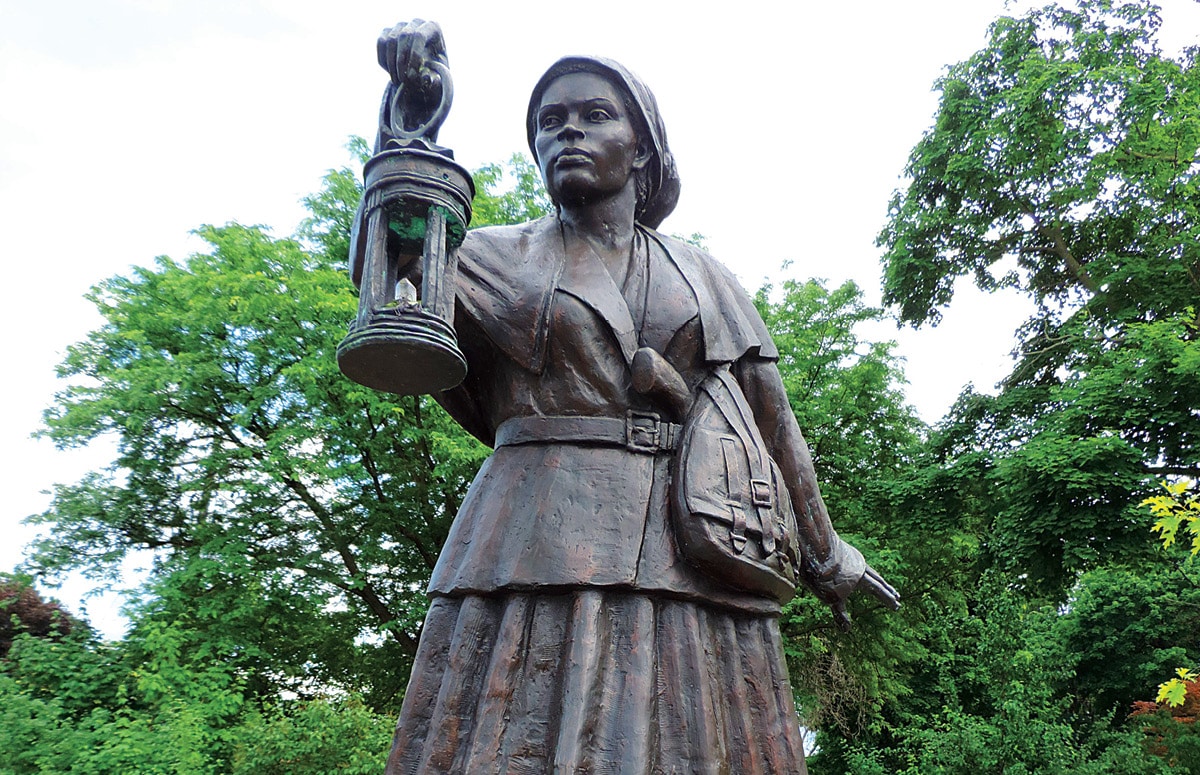
A few miles down the road is the Harriet Tubman National Historical Park, where families can learn more about the famous abolitionist. Open year-round, its grounds feature a visitor center, the Thompson Memorial African Methodist Episcopal Zion Church, the Tubman Home for the Aged and the Harriet Tubman Residence.
Location: 180 South St., Auburn, NY.
🗓️ Looking for Black History Month events and celebrations in Central New York? Click here to view our calendar.
