













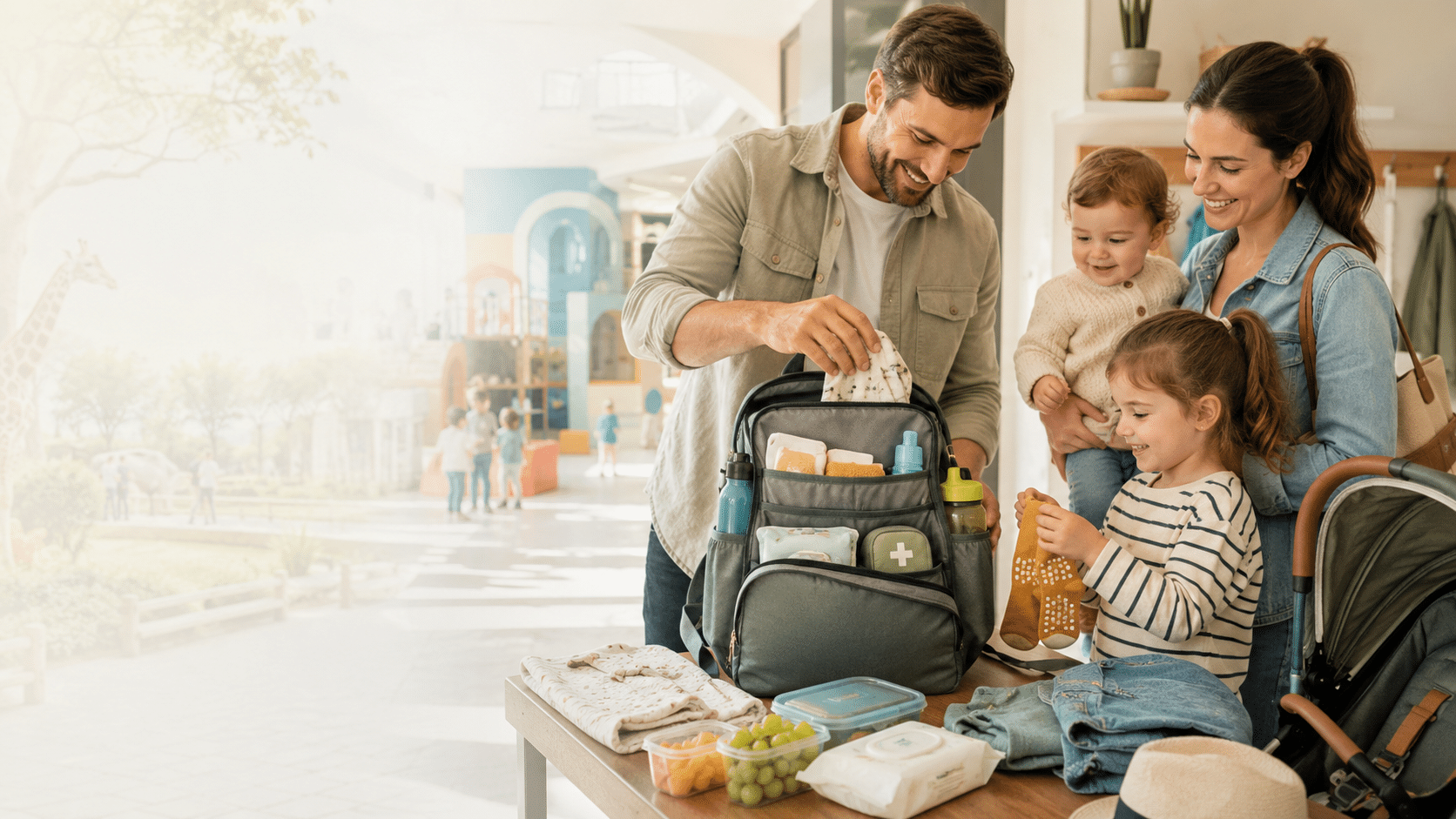
It’s the night before your family day out, and you find yourself staring at your bag, not sure where to start. Family outings are supposed to be fun, but a lot can happen between the parking lot and the first activity. Someone gets hungry, a drink spills, a sock disappears, or the Central New York weather changes faster than expected. Suddenly, the day feels a lot more complicated than it did when everyone was getting ready to leave.
Knowing what to pack for a family day out can help you avoid some of these smaller problems before they turn into bigger frustrations. The key is packing smarter, not packing more. A few well-chosen essentials can keep the kids comfortable, make cleanup easier, and save you from digging through an overstuffed bag all day.
Whether you’re heading over to the children’s museum, spending the day at the zoo, or planning a rainy Saturday at an indoor play place in Syracuse, this guide will help you build a day bag that actually fits your family.
Check the Venue Details Before You Pack


Before you start filling backpacks and stuffing diaper bags in preparation for your day, take a few minutes to double-check the venue’s website. Places like zoos, museums, and indoor play places can have very different rules, so knowing the specifics ahead of time can save you a lot of frustration once you arrive.
For example, some locations may freely allow outside food and snacks, while others restrict food to on-site cafes and special designated areas. Some attractions are easy to navigate with a stroller, while others may have narrow exhibit areas, stairs, or limited stroller parking.
Indoor play places, in particular, might have rules of their own. Many require appropriate grip socks. Some may provide guests with lockers, while others require families to keep all their belongings with them at all times.
You’ll also want to verify details like ticket requirements, parking availability, re-entry policies, and bag size restrictions before you start packing, even if you’ve been to the venue before.
A quick check is often all it takes to help you avoid packing unnecessary items or finding out at the door that you’re missing something essential. This is especially true during busy school breaks in Central New York, when attendance is higher than usual and certain attractions may implement special procedures.
Choose the Right Bag for the Day
One of the easiest ways to overpack is to choose a bag that’s bigger than you actually need, so it helps to match the bag to the outing. For instance, a two-hour stop at a children’s museum will usually require a lot less gear than a full day at the zoo. Factors like the age of your children and the length of your stay should naturally impact what you carry, as well.

Many parents find a comfortable multi-compartment backpack helpful because it distributes weight evenly while keeping both hands free. However, families with babies or young children in tow might find a diaper bag with lots of different sections a lot more practical. If you’ll be bringing a stroller along, a stroller organizer can help you keep items like snacks, wipes, and water bottles close at hand.
Going somewhere that allows you to bring outside food? An insulated lunch bag can help keep drinks, sandwiches, and snacks cool throughout the day without taking up too much space.
Pack Food and Drinks Without Overdoing It
As any parent knows, few things can send a family outing off the rails quite like hungry kids. But resist the urge to pack enough food to feed all of you for a week just to make sure you’re covered.
Simple, low-mess options are generally the best picks for family day trips. Crackers, pretzels, granola bars, applesauce pouches, and dried fruit travel well without setting you up for a major cleanup experience later in the day. Reusable snack cups or divided containers can help keep portions reasonable and minimize the chance of spills inside your bag.
Prioritize foods that offer kids plenty of quick energy without requiring extended refrigeration. Reusable ice packs can help keep perishables fresh during your day out.
And don’t forget water! Refillable water bottles help keep the whole family hydrated and are easy to top off at venue features like water fountains.
Consider timing when packing food, too. A family planning an entire day at a big zoo will naturally need more food than one touring a museum for just a couple of hours. Smart, strategic packing helps keep everyone fed while reducing the need for repeated expensive café purchases.
Bring the Clean-Up and Comfort Basics
Even the cleanest, best-behaved child can spill a drink, step into a mud puddle, or end up with sticky hands during the day. A small, well-chosen collection of cleanup accessories keeps you prepared for the unexpected and ready to handle mishaps quickly so you can move on with your day.
Travel wipes deserve a place in every parent’s bag, as they’re useful for more than just diaper changes. They’re also perfect for cleaning tiny hands after a snack, removing playground grime, and cleaning up spills.
Likewise, hand sanitizer is good for when standard soap and water aren’t available, and reusable wet bags make it easier to manage muddy shoes, wet socks, and more.
Comfort matters just as much as cleanliness, too. Museums are notorious for sometimes being chillier than expected, while outdoor venues like zoos can start chilly only to warm up quite a bit later in the afternoon.
Packing extra lightweight layers can be especially useful during the spring or fall when Central New York weather has everyone guessing from day to day, and a compact first-aid kit is usually enough for small scrapes, blisters, and bumps.
Add Baby and Toddler Items Only If You Need Them


Along with the basics covered above, you’ll want to give some extra consideration to age-tailored staples for babies and toddlers.
Diapers or pull-ups, diaper cream, portable changing pads, and an extra outfit are essentials when taking young children anywhere. Even short outings can involve spills, leaks, or accidents.
Many parents also find that a familiar comfort item or two can help very young children navigate busy, unfamiliar environments. Think pacifiers, blankets, or a beloved stuffed animal.
Hydration and feeding needs can look different for younger children, as well, so items like sippy cups and bibs might come in handy. The same goes for transportation. If the venue you’ll be visiting isn’t stroller-friendly, a baby carrier might be a good option.
The key here is to fine-tune your packing list to the children coming along, rather than assuming every family needs the same exact collection of essentials.
Let Older Kids Carry a Few of Their Own Things
As children get older, they can take responsibility for more of their own things, which makes family outings easier for everyone. This doesn’t necessarily mean loading them up with a heavy backpack to lug around all day, though. It just means choosing a few simple items they can manage on their own.
School-age children can carry their own water bottle, a pair of sunglasses, a light jacket, and a small personal item. This helps take a little pressure off the parents while giving kids a sense of ownership over the outing.
A small children’s backpack can be helpful, but keep the focus on practicality. Pack only what they’ll actually use, and avoid filling the bag just because there’s extra space.
Add Destination-Specific Items


Once you have the basics covered, adjust the rest of your bag based on where you’re going.
For a museum or children’s museum
In most cases, a museum packing list will look a lot lighter than lists for other venues, and with good reason. Most museums have seating areas, climate-controlled rooms, and restrooms that are easy to access.
But because museums often involve slower periods of exploration, it might be worth packing a small, quiet activity for small children who could use a break between exhibits. Think drawing pads, travel games, or small notebooks.
Keep in mind that lightweight sweaters and jackets are worth bringing. Plus, make sure that your children’s museum packing list includes a way to keep tickets, membership cards, and similar resources close at hand instead of buried at the bottom of a bag.
For a zoo
Zoos involve outdoor environments, longer walking distances, and extended periods from one break to the next, so knowing what to bring to the zoo with kids usually requires a little more forethought. Families should always think about weather, with items like water bottles, sunscreen, hats, and sunglasses becoming especially important during the hot summer months.
Choices like lightweight layers, stroller fans, and bug spray are also helpful, depending on the season.
Small binoculars can make the visit more fun for kids who’d appreciate a chance to spot their favorite animals at a distance.
Worried about the possibility of dealing with tired little legs before the day is over? See whether the zoo allows wagons or similar options and add one to your zoo packing list, as they can make a big difference.
For an indoor play place
A good indoor play place packing list should focus less on weather and more on movement, cleanup, and overall comfort after playtime.
Anti-skid grip socks are usually the most important item to remember, since many indoor play places require them. Bringing an extra pair can also help if socks get damp, dirty, or lost during play.
After climbing, sliding, crawling, and running around, kids may be sweaty, sticky, or ready for something dry and comfortable on the ride home. A backup shirt or light layer can help, while a small shoe bag keeps sneakers and damp socks separate from the rest of your things. For children with longer hair, an extra hair tie can also make active play easier.
Helpful Extras Worth Considering
Some items might not be the right fit for every outing, but they can make the longer or more frequent trips a lot easier for the entire family.
A portable charger can be useful if you rely on digital tickets, membership apps, maps, or your phone’s camera throughout the day. Stroller hooks can free up space without the need to bring an extra bag.
Small activity kits and child-sized headphones are great for busy environments, especially if you have kids who are noise-sensitive or easily overwhelmed by crowds.
What to Leave at Home
Packing smart also means knowing what can stay behind. A short family outing probably won’t require a favorite toy, multiple backup outfits, every snack option, or a full-size first aid kit.
Bulky items quickly take up space, especially once the kids lose interest or you’re carrying everything yourself from one area to the next. So, instead of preparing for every possible scenario, focus on the issues you’re most likely to run into at that specific venue.
Not sure what to cut? Think about the things your family actually used on your last outing and what stayed buried in the bag all day.
Family Day Trip Checklist with Babies/Toddlers
Before you head out the door for the day, take a moment to go over the essentials one last time.
Check:
- Hours and admission requirements
- Tickets and membership information
- Parking details
- Food and drink policies
- Sock requirements
- Weather forecasts
Pack:
- Water bottles
- Simple snacks
- Wipes
- Compact first-aid kit
- Extra clothing (if needed)
- Wet bag
Add (based on destination):
- Sunscreen, hats, and weather layers for the zoo
- A quiet activity and a light sweater for the museum
- Grip socks and a small bag for shoes or damp socks for the indoor play place
The best family day-out packing list isn’t necessarily the longest one. It’s the one that makes it the easiest for your family to stay comfortable and ready for whatever the day might bring.
A little careful preparation keeps your focus right where it belongs – making wonderful memories instead of dashing back to the car or toward the gift shop for something you wish you’d packed.


